

Leave Your Message
Large Tow Trucks have become a more growing necessity in the increasingly dynamic and changing automotive industry. The trend for these vehicles is similar to broader trends in transportation and logistics. In 2025, the companies and consumers will rely heavily on these vehicles to be able to provide an efficient and effective towing service in the future. Furthermore, one can understand how new innovations and good investments can do wonders for having a very bright future for this refurbished truck market by doing so with market insights and success stories within this niche.
DEYANG HONGKAI AUTO TRADING CO., LTD., based in Sichuan Province of China, is an emerging company established for trading trucks within the member provinces of China, with a notable shift towards overseas trade in 2023 after attaining strides in refurbished truck businesses in which Deyang Hongkai has set the standard in quality and reliable business commodities. And while the rest of the industry keeps transforming, it would be advisable for stakeholders to understand what trends surround Large Tow Trucks, especially moving toward any goals for success in this continuously evolving market space.

One can look towards 2025 as a point at which change is certain in the arena of the large tow truck market. The emerging trends are shaping many factors that would cause upheavals in the industry. The blending of modern-day technology into tow truck operations is one such development. Companies have pioneered telematics and GPS tracking to revolutionize fleet management and enhance the speed of response. The aforementioned example of technological evolution has not affected just the efficiency of operations for towing industry but has also brought advancements in terms of customer service experience, making it possible to reach out and provide assistance to customers with timely real-time updates. It would be safe to say that a very important trend in the advent of large tow trucks is recognized as an emphasis in sustainability and eco-friendly practices. As the environmental scenario becomes increasingly rebounding, such corporate houses are seen to be searching for electric and hybrid tow trucks as alternatives. Such adaptations are in harmony with global sustainability goals and will certainly come up against increasing public demand for a greener solution. To cater to this market, manufacturers are busy developing more efficient vehicles, which could cut carbon footprints and lend themselves toward lesser operational costs in the long run. Another trend that hits the industry is the motivation for better training and professional development of towing operators. With the rising needs for such specialized services, especially in urban areas, where resources may not be all that forthcoming, companies have come to appreciate that investment in their workforce is worthwhile. Better training programs provide operators not only the technical know-how but also develop a strong customer service culture that hinges on trust and loyalty among clients. With the arrival of 2025, these trends are collectively pointing at a market that is no longer static but dynamic and evolving into some serious possibilities with greater challenges along the way.

The advancement of technology does immense things with increasing the efficiency and efficacy of tow trucks, thereby determining their future in the industry. Advanced refrigeration units for trailers are modern innovations that showcase how technology is advancing the sector of transportation and logistics. These advancements are specifically designed to improve the performance of vehicles while offering a whole range of services that tow trucks would provide in industries that require preservation of cargo while being transported.
Furthermore, rental services for modular trailers gain a new lease of life as the market grows at a compound annual growth rate of 6.5% from 2024 to 2030. Such growth is an indication of the general flow in which efficiency and adaptability act as vital talking points. Advanced auxiliary systems for trailers are expected to reach a total market value of about $457 million in their programmed provision by the year 2033. That trend is moving towards investments that significantly improve the effectiveness and safety aspects of vehicles when being towed. As technologies develop, these promise to develop better-performing, lower-cost operations, and eventually more sustainable industries.
Changes are also happening to the electric world due to emerging popular model chains. The increasing awareness of the issues of consumers in considering towing their electric vehicle engines informs the manufacturers that tow trucks should be subjected to changes to accept that. With increasing regulations and improving technologies, it is very clear that the evolution of large tow trucks would increasingly depend on and go hand in hand with the further advancement of technology for growth in the industry as well as service delivery.
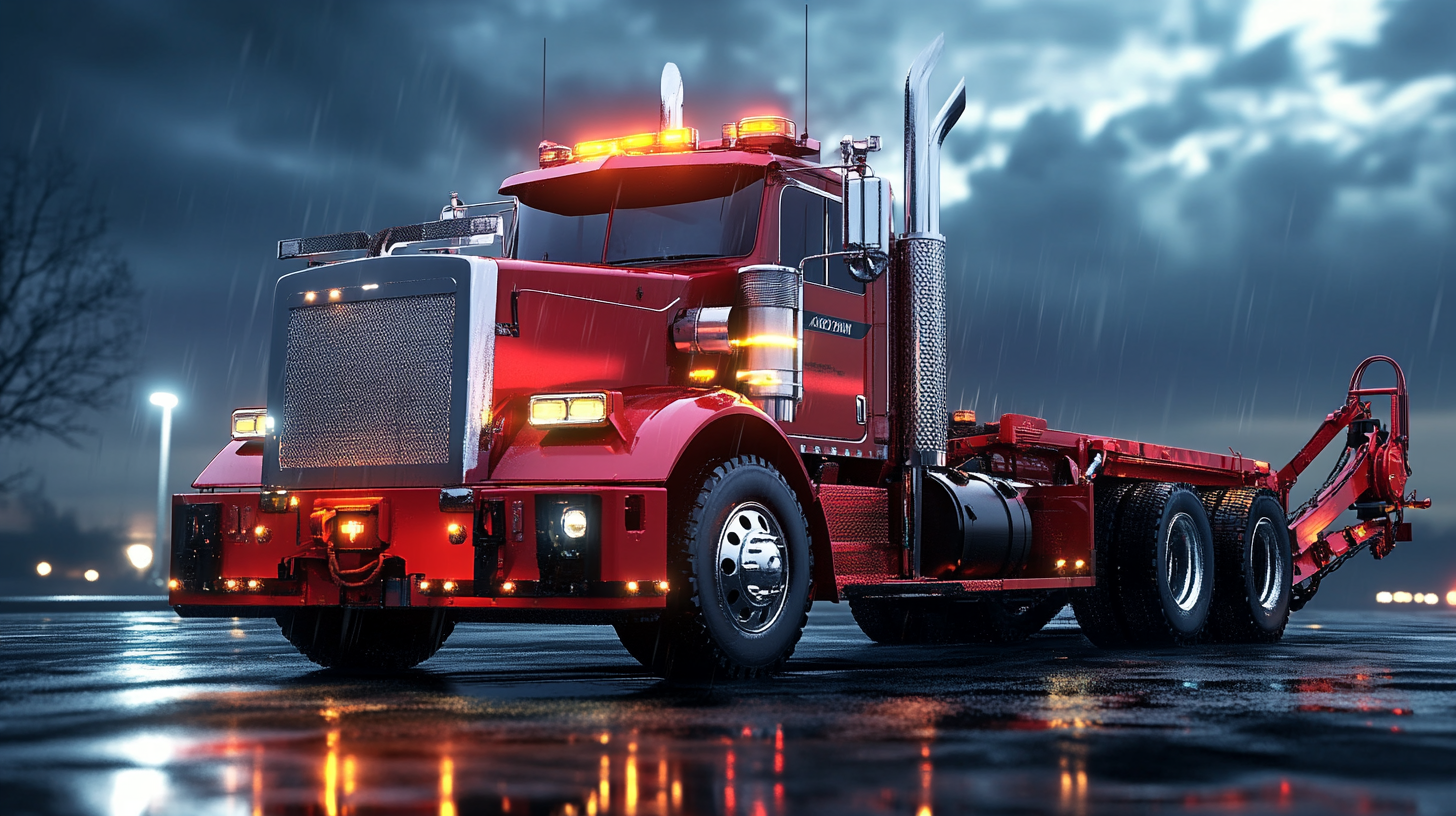
The Big Tow Truck market is exciting for its stakeholders when considering the vision it paints for the year 2025. Demand factors driving big tow trucks are relevant to the broader business environment aspects of logistics, transfer, and urban development. Vehicle ownership rises; roadside assistance rises; the automotive industry will always grow and will build a greater demand for these large tow trucks as prime movers for other businesses.
Advanced technology also continues to help alter the way in which services for towing trucks have been provided. Indeed, one can see the innovations emerging that will improve service efficiency and response time as these continue to evolve. New telematics and smart towing solutions have proven to increase the operational abilities of a tow truck fleet by allowing it to plan routes better and welcome real-time communications with clients. So these innovations not only help meet the growing demand but also raise the bar for the quality of service provided to customers, thus emphasizing the importance of very big tow trucks for operational effectiveness across many industries.
The market forces have also been shaped by the increasing attention directed at making the industry operate sustainably. Now not just consumers but even businesses are making incursions into developing eco-friendly alternatives, giving impetus to manufacturers to cook up more fuel-efficient production and start dabbling in the electric vehicle technologies in tow truck automation. This trend does not only suck the regulatory pressure dry but also molds easily to a market that is leaning into environmentally friendly practices, thus broadening the horizon for prospects within the industry. With such demands coming from multiple angles and innovations,
it would be a vibrant and impactful future for large tow trucks.

Oxygen developed paragraphs in a much broader view talking about 2025; in-between customer expectation and the growing requirements of the towing industry, some studies suggest instead of solely contemplating the efficiency of tow service, customers are now a bit more concerned about transparency and communication. Consumption patterns showed that about 65% expect real-time tracking for their service requests; hence, the industry requires an investment in technology enabling good communication.
The demand for eco-friendly practices is on the rise. The National Association of Motorists suggested that almost 70% of the consumers surveyed would rather choose a towing company using green practices such as fuel-efficient trucks and environmentally safe materials. Thus, since big tow trucks are the backbone of the industry, companies utilizing sustainable technologies are posited to enjoy a competitive edge in alignment with consumer values.
Moreover, convenience remains a chief consideration in customer satisfaction. A report by MarketsandMarkets affirms that 58% of the interviewed customers are looking for mobile apps assisting a fast booking and payment procedure. Tow service providers incorporating digital solutions are certainly improving customer experience and also making their business more effective in terms of operational efficiency of service delivery. By monitoring these dynamic consumer preferences, such players in the towing industry can position themselves strategically toward success in 2025 and beyond.
The tow truck industry is actively moving to greener methods, and various companies are trying to implement eco-friendly practices to decrease their environmental impacts. Sustainability initiatives are becoming more important legally and gaining importance in enhancing brand reputation and consumer trust. Many of the larger operators have begun investing in electric and hybrid vehicles, which lead to significant reductions in carbon emissions compared to diesel-fueled trucks. By including greener alternatives into their fleets, companies are further committing to minimizing negative environmental effects in their operating models.
Another point is the use of sustainable materials in truck manufacturing and parts. Companies are looking into using recycled and biodegradable materials for their tow trucks in order to dispose of materials properly and create a circular economy. This transition does help support a healthy planet and satisfies the increasing market demand for environmentally friendly products. Also, reducing fuel consumption and operational costs through energy-efficient practices in daily operations briefly includes smarter routing and tech.
On another level, industries have been working together to sustain projects through stronger actions. Tow truck operators are beginning partnerships with environmental organizations to gain certifiable orders and develop sustainability targets across their industries. This collaborative initiative allows for opportunities for exchanging ideas, facilitating innovations, and therefore better-practicing industries on both grounds-their and the earth. This trend and some others show that while preparing for a greener future, the tow truck industry demonstrates that economic success can go hand in hand with ecological goodwill.
Current progress in the hauling industry is at the doorstep of changes brought about by companies that are writing success-laden scripts with fresh definitions of sustainable operation in the arena. Among these, some multi-national companies, large tow truck manufacturers, and towing service providers have joined the course of changing or transforming their mode of operation to align with the shifting logistics needs of the times. As these companies move toward advanced technologies, they also focus on the building of strong-brand identities with which they can relate to their customer bases.
One prime example is a leading tow truck company which adopts ecological and efficiency principles into its operations. They will pave the way for sustainable tow operations by adopting cutting-edge environmentally conscious designs. It is a strategic direction that is not merely regulatory compliance, but a broader movement of the industry toward sustainability for a consumer base that becomes increasingly aware.
Smart technology has completely changed the weight of service delivery when combined in tow trucks. Companies are now capable of delivering operational efficiency, speed in response time, and assurance of excellent customer service through analytics. Such compatibility resonates well with their customer base and converts loyalty into partnerships in the long term. These innovative changes made in these companies are shaping the future of the towing sector, building great success stories for the agility and forward-thinking needed in today's fast-paced market environment.
Looking ahead to 2025, there are changes brewing in the industry, the most major being the regulations affecting the way everything operates. Among these are recognized moves toward greater safety standards, compelling tow truck operators to adopt leading-edge technology and training practices. These rules do not just intend to ameliorate safety by roadside assistance; they also intend to enhance the systematic efficiency of truck service companies. Those operators who welcome these changes realize their own fitness for an increasingly complex arena in vehicle-raising and emergency-response activities.
Beside safety regulations, environmental regulations have been impacting the industry. Companies are driven by new emissions standards to prefer greener, more fuel-efficient types of tow trucks. This transition helps in reducing the carbon footprint from operations and also provides new openings for businesses committed to sustainability. With the rising level of public awareness concerning environmental issues, customers would then be more inclined to choose companies represented by such values; and thus competitive advantage may follow.
Moreover, licensing and training are continually changing to create better skilled workers. Standardizing qualifications within the industry means tow truck operators are better trained now than ever before in customer service skills as well as technical skills. This phase of professionalization is absolutely vital in the present time, particularly when consumer expectations are so high in a digital age that affords paramount importance to quick response times and customer satisfaction. Therefore, adapting to such regulatory changes will give a business a cutting edge over others, with respect to its business operation and reputation in the marketplace.
Towards the end of 2025, the fragmented picture of the large tow truck industries foresees challenges flooding its veins. The most prominent of the areas needs seeming development through advanced technology in towing operations. Such developments become critical at this juncture as the emergence of electric vehicles or smart makes has made it inevitable for tow truck operators to keep up with the changes in handling operations for these new vehicle types. Therefore, safe towing equipment for these plug-in vehicles becomes imperative since towing requirements differ from those of conventional types. However, investing in technology for this purpose is too expensive for small operators and needs broader collaboration in the industry to develop these standardized solutions.
Other than that, the second front is the regulatory environment. A greater number of jurisdictions are laying more stringent laws, regulations, and policies pertaining to towing. Compliance of being ahead on such things is now an added responsibility for the company, which may involve expenses on training workers within the organization or procurement of equipment to meet standard safety requirements. Noncompliance would subject the company to fines and reputational damage; hence, it is very relevant for companies to integrate compliance into operational strategies. Finally, it is important for the industry to lobby for policies that influence its growth and sustainability, and this would require engagement with the lawmakers and industry groups.
Labor shortage has been one of the issues that threaten the large tow truck industry. The demand for talented drivers is not limited to this, since the supply cannot meet the requirement put to a driver. The companies have invested much into incentives to woo people into learning with driving schools. Improving the ways through which the industry attracts its talent into driving will yield great dividends. Thus, the industry is likely to position itself well to weather the storm and prepare for the best in 2025 and beyond.
The tow truck industry is experiencing stricter safety standards, new environmental regulations, and changes in licensing and training requirements, all of which are influencing operational practices.
Tow truck operators are required to adopt advanced technologies and training practices aimed at improving roadside assistance safety and overall service efficiency.
New emissions standards are pushing companies to invest in greener, more fuel-efficient tow trucks, which not only reduce the carbon footprint but also align businesses with customer values around sustainability.
Standardized qualifications are improving technical skills and customer service training for tow truck operators, which is essential for meeting rising consumer expectations.
Challenges include adapting to advanced technologies for electric vehicles, navigating a complex and evolving regulatory environment, and addressing labor shortages in skilled drivers.
The need to invest in technology capable of towing electric vehicles and other smart vehicles can be financially burdensome for small operators, necessitating industry collaboration for affordable solutions.
Compliance with strict towing laws and safety standards is crucial to avoid fines, reputational damage, and to support the overall growth and sustainability of the industry.
The demand for skilled drivers is outpacing supply, making it challenging for companies to attract new talent; addressing this requires enhanced recruitment strategies and training incentives.
As consumer expectations for quick response times and satisfaction rise, businesses must adapt to these demands through improved training and operational practices to maintain a competitive edge.
The industry needs to engage with lawmakers and industry groups to advocate for policies that support growth and sustainability in the face of regulatory and market pressures.